
Nervous System Regulation Isn't Just for Moms — Let's Teach It to Our Kids Too
I talk a lot about nervous system regulation for moms — how to notice when you're activated, how to pause before you react, how to come back to a grounded state when everything in you wants to spiral. And here's something I really love about this work: the same skills that help us regulate as moms are exactly the skills our kids need to learn too.
Kids don't come into the world knowing how to regulate their emotions. That's not a flaw — it's just biology. The parts of the brain responsible for calming down, thinking things through, and managing big feelings aren't fully developed yet. Which means when your child is melting down, screaming, or completely overwhelmed, they're not being difficult on purpose. Their nervous system is doing exactly what an underdeveloped nervous system does under stress.
This is where we come in.
Kids learn regulation the same way they learn almost everything else — by watching us. When we practice simple nervous system regulation tools in a way our kids can observe, they learn these skills too — hopefully before they wind up in therapy in their adult lives!
The earlier we start teaching these skills, the more natural they become. A child who learns at six how to notice their body getting worked up, and has a go-to strategy for calming down, carries that skill into adolescence and adulthood in a way that changes everything.
The good news is that you don't need anything complicated to start. Kids respond really well to tangible, hands-on tools — something they can touch, hold, and turn to when big feelings show up.
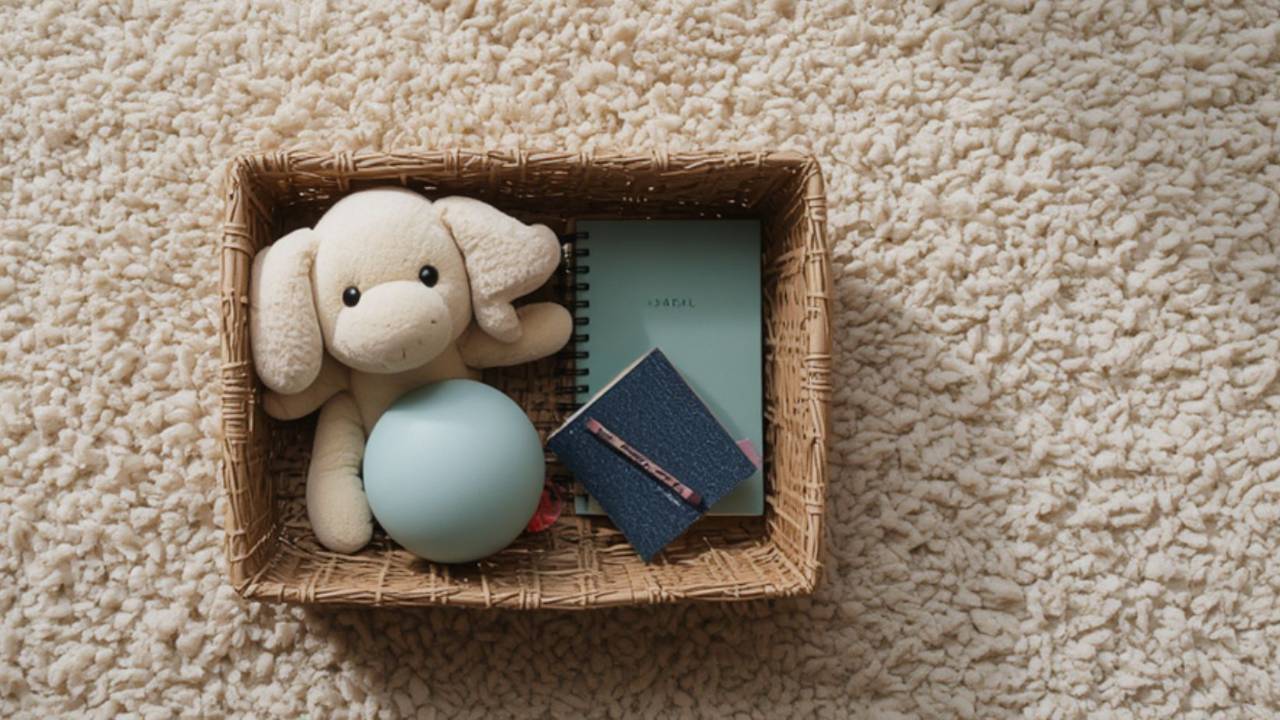
One of my favorite ways to teach kids is by having a "calm box" in the home.
When kids are overwhelmed, our instinct is often to send them to time-out — a consequence, a punishment, a "go sit and think about what you did." But a meltdown isn't misbehavior. It's a nervous system that's flooded and doesn't yet have the tools to come back down on its own. Instead of framing a break as a punishment, try framing it as a resource: when your child is dysregulated, direct them to their calm box instead of a time-out chair. The message shifts from "you're in trouble" to "your body needs help calming down, and here's what might help." Over time, kids start to recognize their own big feelings and reach for the box on their own — building a skill that will serve them for life, not just avoiding a consequence in the moment.
A calm box (sometimes called a coping box) is a physical container filled with items and reminders that help you find calm during moments of stress or big emotion. Here's why it works: when we're anxious, panicking, triggered, or overwhelmed, the frontal lobes of our brain — the part responsible for reasoning, problem-solving, and decision-making — tend to go offline. That's true for adults, and it's especially true for kids, whose frontal lobes are still developing in the first place. In that flooded state, it's genuinely hard to remember what to do to help yourself feel better, even if you know a dozen coping skills. A calm box solves that problem by giving you one central place to go, so you're not relying on a dysregulated brain to remember what helps.
The key is variety. Just like a handyman needs different tools for different jobs, you want a mix of items in the box — because what works one day, or in one kind of overwhelm, might not work the next. A few ideas to include: a journal, coloring books or colored pencils, a scented candle or essential oil, stress balls or silly putty, worry stones, sensory fidget toys, favorite photos, or note cards listing activities like breathing exercises, guided meditations, taking a walk, or listening to uplifting music.
Building a calm box together with your child is its own kind of teaching moment — you're showing them that big feelings are normal, that we can prepare for them ahead of time, and that regulating our nervous system is simply part of taking care of ourselves. And when you build one for yourself alongside theirs, you're modeling exactly what you're trying to teach.
I've put together a free Calm Box handout with a full list of objects and activities to get you started, for both you and your child.
Grab the free Calm Box handout here and start building this skill with your child today. And if you're looking for more nervous system regulation tools — for yourself or for your family — check out Empowered Motherhood.
