
The Anxiety Bell Curve: Why Panic Always Passes
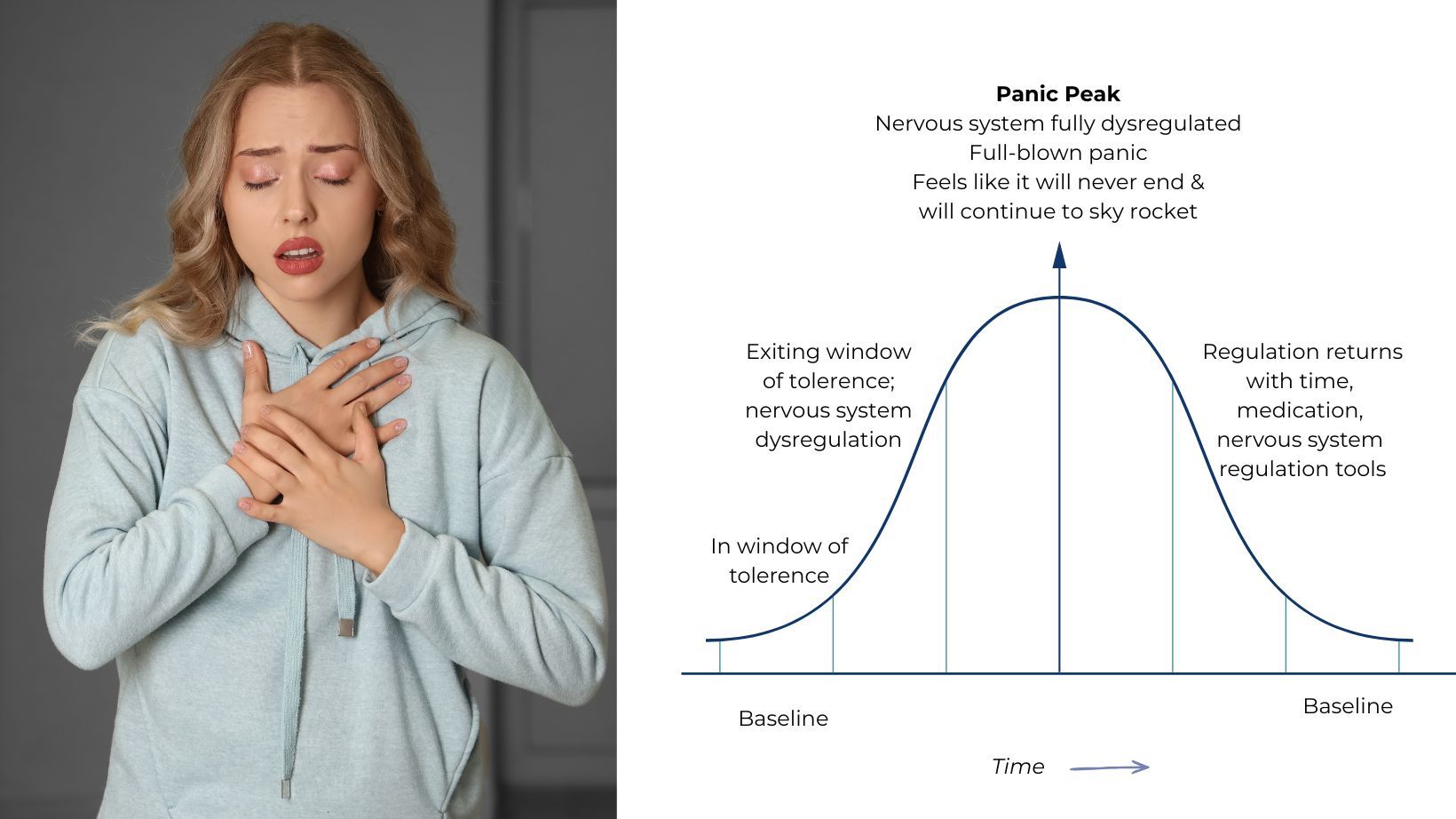
What if I told you that anxiety and panic follow a predictable pattern—one that you can trust, even when it doesn't feel that way?
One of the most helpful things I teach my clients in moments of rising anxiety is this: anxiety works like a bell curve. It rises. It peaks. And then, without exception, it comes back down.
But in those moments at the very top of the curve—when panic is full-blown and overwhelming—we lose sight of that truth entirely. We're convinced the anxiety will keep climbing until something catastrophic happens. We think, "This is it. This is the moment my body gives out. I can't survive this." The peak of the panic feels infinite and permanent.
Here's what's actually happening: You're experiencing dysregulation. Your nervous system has exited its window of tolerance. The alarm bells are blaring. And in that state—with cortisol and adrenaline flooding your system—your brain literally cannot access the information that this moment will pass.
But it will.
What brings you down the curve? Sometimes it's medication. Sometimes it's a nervous system regulation tool—breathing, grounding, movement. Sometimes the anxiety-inducing situation simply resolves. Sometimes your body's own chemistry eventually rebalances.
Or often, it's a combination of things. But what always happens is that the curve comes down. The panic subsides. Your nervous system finds its way back to baseline.
Knowing this can change everything.
When you understand that anxiety moves in waves—that there's a predictable arc to it—you can talk to yourself differently in those hard moments. You can say, "I'm at the peak right now. This is the steepest part of the climb. But curves go down. My nervous system will regulate again."
You're not weak for reaching the top of that curve. You're not broken. You're having a very normal, very human nervous system response to a perceived threat. And your nervous system is doing its job—even when that job feels terrifying.
Here's the thing I want you to know about nervous system regulation tools:
Many of my clients work to develop a toolkit of grounding techniques, breathing practices, and somatic exercises. And they tell me the same thing: "I know these tools exist, but I can't remember them when I'm in a panic attack."
Sound familiar?
This makes complete sense, actually. When you're at the peak of that curve—when your nervous system is fully dysregulated—your prefrontal cortex (the thinking, problem-solving part of your brain) goes offline. You literally cannot access new information or remember a sequence of steps. It's like trying to remember how to solve a math problem while you're failing the exam. Your brain is not available for learning or recall in that moment.
That's why we practice these tools before we reach the peak.
When you're within your window of tolerance—or just beginning to exit it, in those early signs of rising anxiety—that's when your brain can still learn and integrate. That's when breathing exercises, grounding techniques, and somatic practices actually land. When you practice them regularly, they become automatic. Your nervous system knows them by heart, and they're accessible even when the thinking brain shuts down.
So many clients assume their regulation tools "don't work" because they tried them once during full-blown panic. But that's setting them up to fail. You wouldn't wait until the night before an exam to study for the first time and then assume you're not smart enough to learn the material. You need consistent practice, repetition, and understanding nervous system dysregulation so you can catch yourself on the way up the curve.
The anxiety bell curve is not your enemy. It's actually your body's way of saying, "Hey, something needs my attention." Once you understand the shape of it—once you trust that what goes up comes down—you can meet that anxiety with a bit more compassion.
And that's where healing begins.
Getting Support
If you're ready to build a nervous system toolkit that actually works—one you can access before panic takes over—I'm here to help. Whether you need personalized support through 1:1 therapy sessions or prefer to learn at your own pace with a self-guided course, I have options that fit your needs. The goal is the same: equip you with tools that work, practiced often enough that they're there when you need them most.
Have questions about which path might be right for you? Get in touch! I'd love to hear from you.
