
Understanding Polyvagal Theory
If you’ve ever found yourself thinking “Why do I shut down when things feel overwhelming?” or “Why does my body react before my mind can catch up?”—you’re not broken. Your nervous system is doing exactly what it was designed to do.
Polyvagal Theory is one modern, trauma‑informed framework that helps us understand how the nervous system responds to safety, connection, and threat. It gives language to experiences many people already recognize—shutting down, going into high alert, or feeling calm and connected—by explaining why these responses happen in the body.
What Is Polyvagal Theory?
Polyvagal Theory, developed by neuroscientist Dr. Stephen Porges, describes how our autonomic nervous system constantly scans for safety or danger—often outside of conscious awareness. This process is called neuroception.
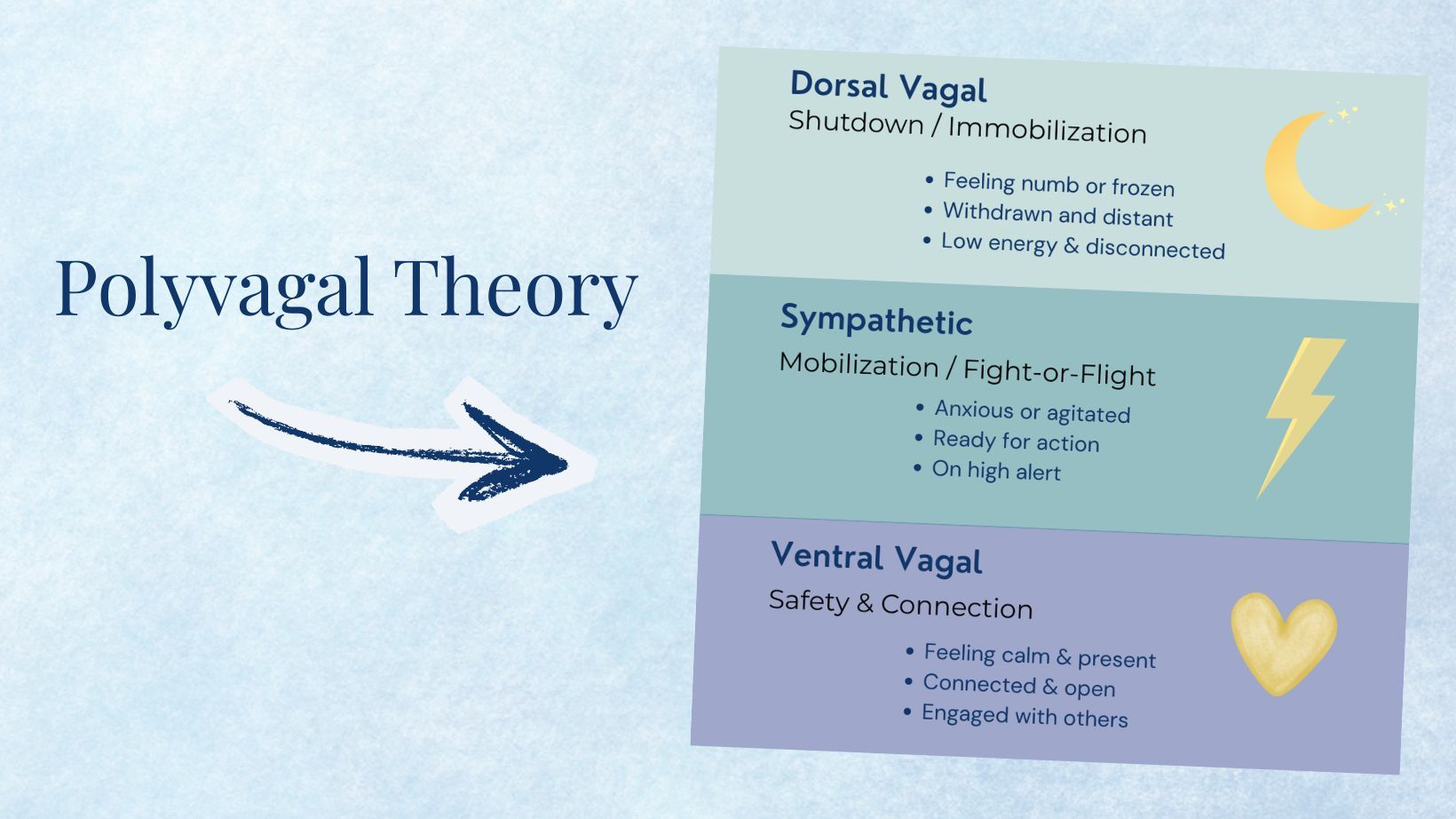
Rather than viewing the nervous system as simply “calm” or “stressed,” Polyvagal Theory identifies three primary states that influence how we feel, think, and relate to others:
- Ventral Vagal (Safety & Connection)
- Sympathetic (Mobilization / Fight-or-Flight)
- Dorsal Vagal (Shutdown / Immobilization)
These states are adaptive survival responses—not personality traits or character flaws. We all move fluidly between these states throughout the day depending on what our nervous system perceives as safe or threatening. No one lives permanently in just one state, and none of them mean something is “wrong” with you.
Ventral Vagal: Safety and Connection
The ventral vagal state is the nervous system’s state of safety and social engagement.
When this system is online, we tend to feel:
- Grounded and present
- Emotionally flexible
- Able to connect, communicate, and reflect
- More like ourselves
This state closely overlaps with what it feels like to be within your Window of Tolerance—where you can experience emotion without becoming overwhelmed or shutting down. Healing work happens most readily here, not because stress is absent, but because the nervous system has enough safety to stay engaged.
Sympathetic Activation: Fight or Flight
When the nervous system detects danger, it may shift into sympathetic activation.
This state often mirrors what happens when someone moves above their Window of Tolerance—too much energy, too quickly.
It can show up as:
- Anxiety or panic
- Irritability or anger
- Racing thoughts
- Hyper-vigilance or restlessness
From a polyvagal perspective, this is the body preparing for action. The goal is not to eliminate this response, but to support the nervous system in finding a pathway back to safety and connection.
Dorsal Vagal: Shutdown and Immobilization
The dorsal vagal state is often what people recognize as a freeze or collapse response.
When the nervous system perceives threat as overwhelming or inescapable, it may move into dorsal vagal shutdown. This can feel similar to what happens when someone is outside their Window of Tolerance on the low end—when the system drops below capacity rather than becoming flooded with energy.
Common experiences include:
- Emotional numbness or disconnection
- Fatigue or heaviness
- Feeling frozen, hopeless, or detached
- Difficulty accessing motivation, words, or emotion
This response is frequently misunderstood as depression or withdrawal. From a polyvagal lens, it is a protective survival strategy—the body conserving energy when fight or flight no longer feels like an option.
Why Polyvagal Theory Matters in Therapy—and in Life
At its core, Polyvagal Theory helps us understand what state our nervous system is in—and why certain tools feel helpful in one moment and useless in another.
If you’re in dorsal shutdown, insight‑based or cognitive strategies may feel out of reach. If you’re in sympathetic overdrive, slowing down or sitting still may actually increase distress. When you can identify your current state, support can be matched to what your nervous system needs right now.
Instead of asking “What’s wrong with me?” this framework invites a gentler question: “What is my nervous system responding to, and what would help it feel safe enough to shift?”
Embracing a Polyvagal Perspective
Polyvagal Theory reminds us that our reactions are not random or irrational—they are intelligent, biological responses shaped by past experiences and present cues of safety or threat.
When we learn to recognize dorsal shutdown, sympathetic activation, and ventral connection, we gain a clearer map for understanding what our nervous system is doing and why. This awareness creates space for more compassionate, effective support.
Over time—and often with therapeutic guidance—the nervous system can build greater flexibility. This makes it easier to move out of survival states and return to connection, presence, and choice.
Healing doesn’t mean never leaving regulation. It means knowing how to notice where you are, and how to find your way back.
